Good news: you have a set of customers that have agreed to do video testimonials. Bad news: you haven't done anything about it yet because you want to get a professionally looking video, but hiring an agency or doing it yourself is too much money and time. This guide is about how to coach respondents on how to record professional videos, without hiring any professionals.
A strong video testimonial comes down to four things anyone can control — framing, lighting, audio, and a comfortable subject. And one decision that removes almost all the friction: how you record it in the first place. Here's how to get it right so you speed up the process of identifying a video candidate to sharing your new video.
Framing and Composition
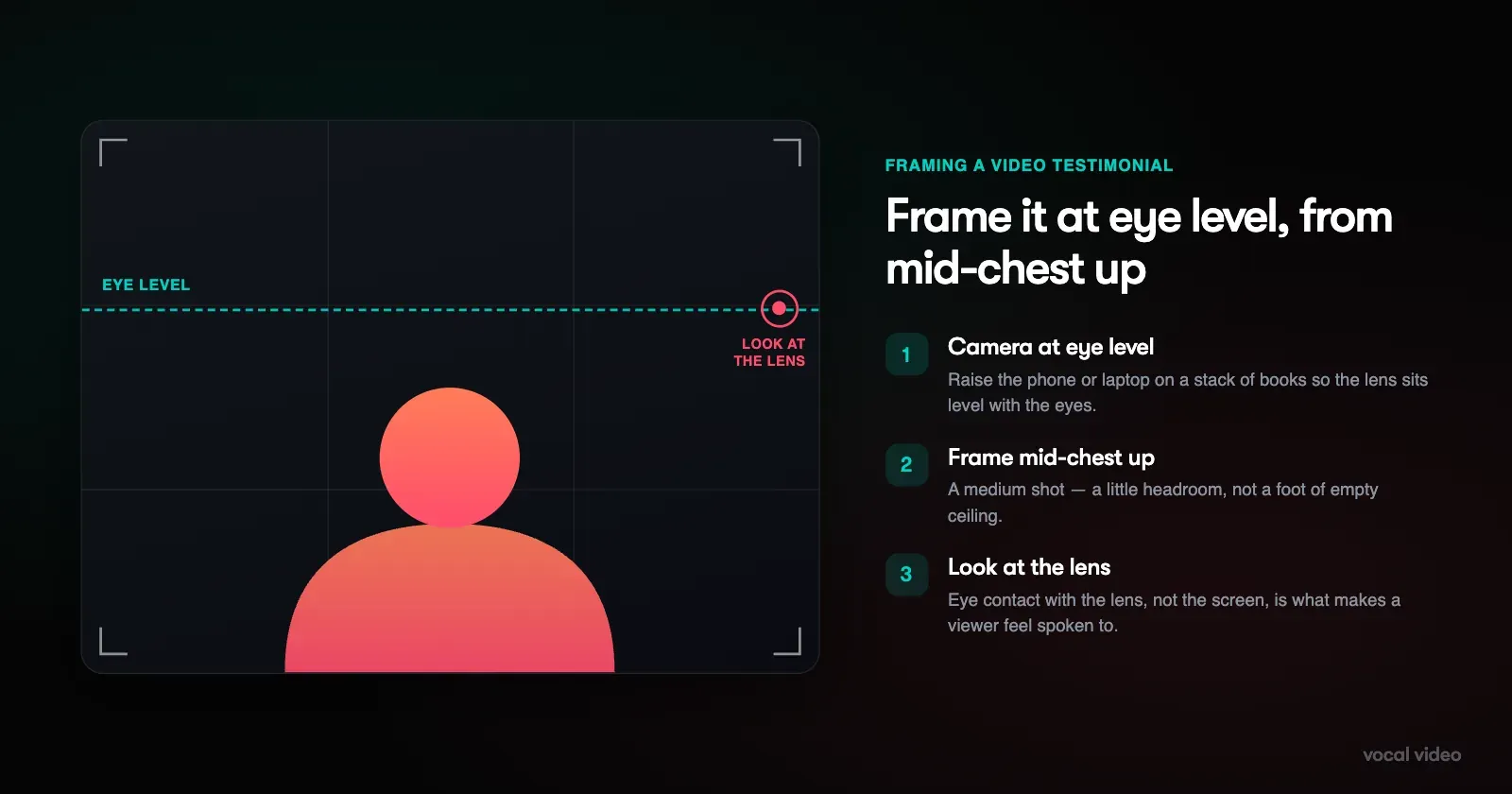
Framing is one of the number one things professional videographers start with, and while simple, it serves to radically improve a video.
- Shoot at eye level. A camera looking up the nose or down at the top of someone's head is unflattering every time. If you're recording on a laptop or phone, raise it on a stack of books so the lens sits level with the subject's eyes.
- Frame from mid-chest up. A medium shot — roughly the top button to just above the head — is the natural framing for someone talking to camera. Leave a little headroom, but not a foot of empty ceiling.
- Look at the camera lens, not the screen. Eye contact is what makes a viewer feel spoken to. If someone is interviewing the subject, have them sit right beside the camera so the subject's gaze stays close to the lens.
- Match the orientation to the purpose of the video. Landscape (horizontal) for a website, YouTube, or an embed; vertical for Reels, Shorts, and TikTok. If you're not sure, shoot horizontally — it's easier to crop down than to invent width you didn't capture.
Lighting
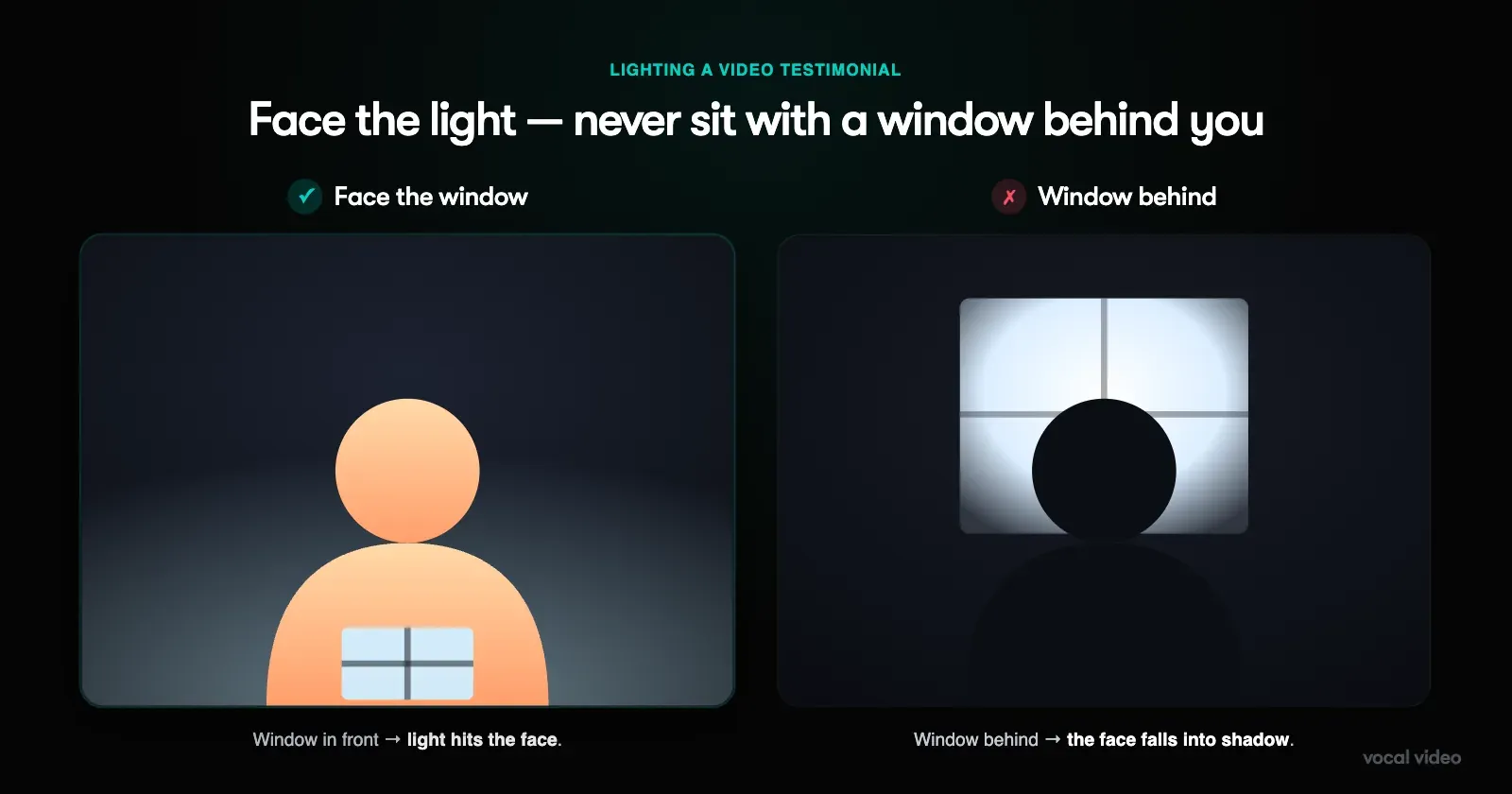
You can spend big bucks on lighting, but get most of the way there for free.
The single most common mistake is putting the light behind the subject — a bright window at their back turns them into a silhouette. Do the opposite: have them face the light. A large window during the day is the best free light source there is, so seat the subject facing it.
Aim for soft, even light on the face. Overhead-only lighting (a ceiling fixture directly above) casts harsh shadows under the eyes and nose. You can add a lamp at eye level to fill those in. If you want to go one step further, use two soft sources — a main light at about 45 degrees to one side, and a gentler fill on the other.
Audio
Here's the thing most people get backwards: viewers will forgive mediocre video, but bad audio is really painful to listen to.
- Get the microphone close. A phone two or three feet from the respondent beats a laptop mic across the room, and a cheap pair of earbuds with an inline mic beats most built-in laptop microphones.
- Record in a small, soft room. Carpet, curtains, a sofa, and a bookshelf soak up echo. Soft surfaces are your sound treatment.
- Kill the background noise. Turn off fans and air conditioning if you can, close the door, silence phones and notifications, and wait out the hallway traffic.
- Do a ten-second test and listen back with headphones before the real take. You'll catch a hum or an echo in seconds — and only if you're actually listening for it.
Background and Setting
The background should support the person, not compete with them. One counterintuitive things - a lamp, bookshelf or plant are all better than a totally blank background.
Give the subject a little depth — a few feet between them and the wall looks more polished than pressing them right up against it. If the only available spot is messy, background blur (built into many recording tools now) keeps the focus on the person. A real person in a slightly imperfect room is more convincing than a staged one.
Getting a Natural, Authentic Delivery
The enemy of a good testimonial isn't bad lighting — it's a subject that comes off as nervous or stiff. A real, slightly imperfect delivery is far more persuasive than a polished performance, so your job is to help the person relax.
- Give them questions, not a script. "Say something nice about us" produces a blank stare. Specific prompts — "What problem were you trying to solve?", "What surprised you?", "Who would you recommend this to?" — produce specific, quotable stories.
- Let the first take be a throwaway. Most people relax the moment they've heard their own voice once. Tell them the warm-up doesn't count.
- Use a teleprompter if they want one. If the subject would feel steadier with words on screen, load a few bullet points or a loose script so they can glance at it without breaking eye contact with the lens.
- Make retakes easy. Knowing they can re-record until it feels right takes the pressure off — and pressure is what makes people sound like a hostage. Aim for one clear idea per answer, and let a few natural "ums" stay in. They read as human.
Recording on Any Device
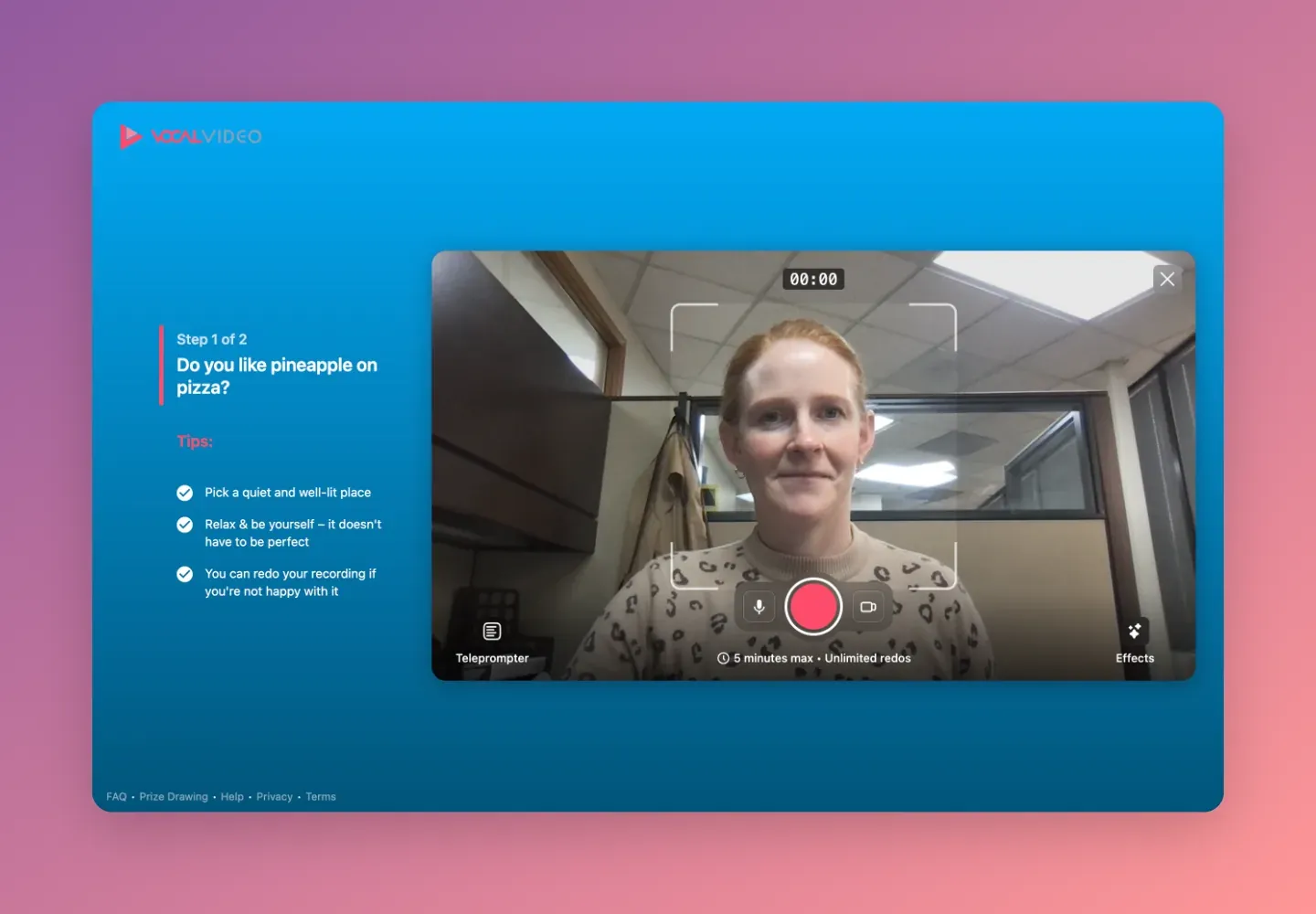
The single biggest thing you can do to get usable footage is to make recording effortless for the person on the other end. Most new smartphones shoot better video than aging webcams, so a phone propped at eye level in a well-lit, quiet room can be a great setup.
You can remove nearly all the remaining friction with a guided video collection experience. With Vocal Video, you send a link or a QR code, and the person records right in their browser — on a phone, tablet, or laptop — with nothing to download or install. Vocal Video guides them one question at a time, offers a built-in teleprompter for the script, includes background blur, and allows unlimited retakes, so the fundamentals above are handled for them without anyone needing to think about "filming."
As one reviewer put it, getting video testimonials used to mean scheduling shoots and big budgets, but "that has changed with Vocal Video — now one just needs the same set up as a Zoom call" (Bill B. on G2). Once the person hits submit, the footage comes back edited automatically — branded, captioned, and ready to share — so light coaching for your respondents is the main thing to spend time on.
Put It All Together
Get four things right — framing at eye level, light on the face, close and clean audio, and a subject who feels comfortable — and you'll have a video testimonial that looks and sounds professional but not overly produced = the perfect recipe for building trust
For the full workflow from sending the request to publishing the finished video, see our guide on how to make a video testimonial. And if you're still weighing whether it's worth the effort, our overview of video testimonials covers what they are and why they convert.
Ready to try it? You can send your first branded collector and start recording testimonials on any device in minutes. Sign up for a free Vocal Video account — no credit card required.
Frequently Asked Questions
Do I need special equipment to shoot video testimonials?
No. A modern smartphone, a bright window to face, and a quiet room with soft surfaces cover the essentials. If you want to step up the audio, an inexpensive external mic or a pair of earbuds with an inline microphone makes a noticeable difference. With a guided collector like Vocal Video, the person recording uses whatever device they already have — phone, tablet, or laptop — right in their browser, with nothing to download or install.
How do I get good audio?
Get the microphone as close to the speaker as you reasonably can, record in a small room with soft surfaces (carpet, curtains, a sofa) to cut echo, and silence background noise like fans, air conditioning, and phone notifications. Do a short test recording and listen back with headphones before the real take — audio problems are easy to hear and easy to fix once you're actually listening for them. Audio matters more to viewers than video quality, so it's worth the extra minute.
How do I make someone comfortable on camera?
Give your subject specific questions to answer instead of a script to memorize, and let the first take be a throwaway warm-up that doesn't count. Allow unlimited retakes so there's no pressure to nail it in one go, and offer a teleprompter if they'd feel steadier with a few notes on screen. Most people relax once they've heard their own voice once — the goal is a real, conversational answer, not a flawless performance.
Is there a guide to recording I can send to respondents?
We recommend keeping guidance for your video candidates short and sweet. Some recording tips come built into the default Video Collectors in the platform, and this short guide: How to Record a Great Video can be helpful.